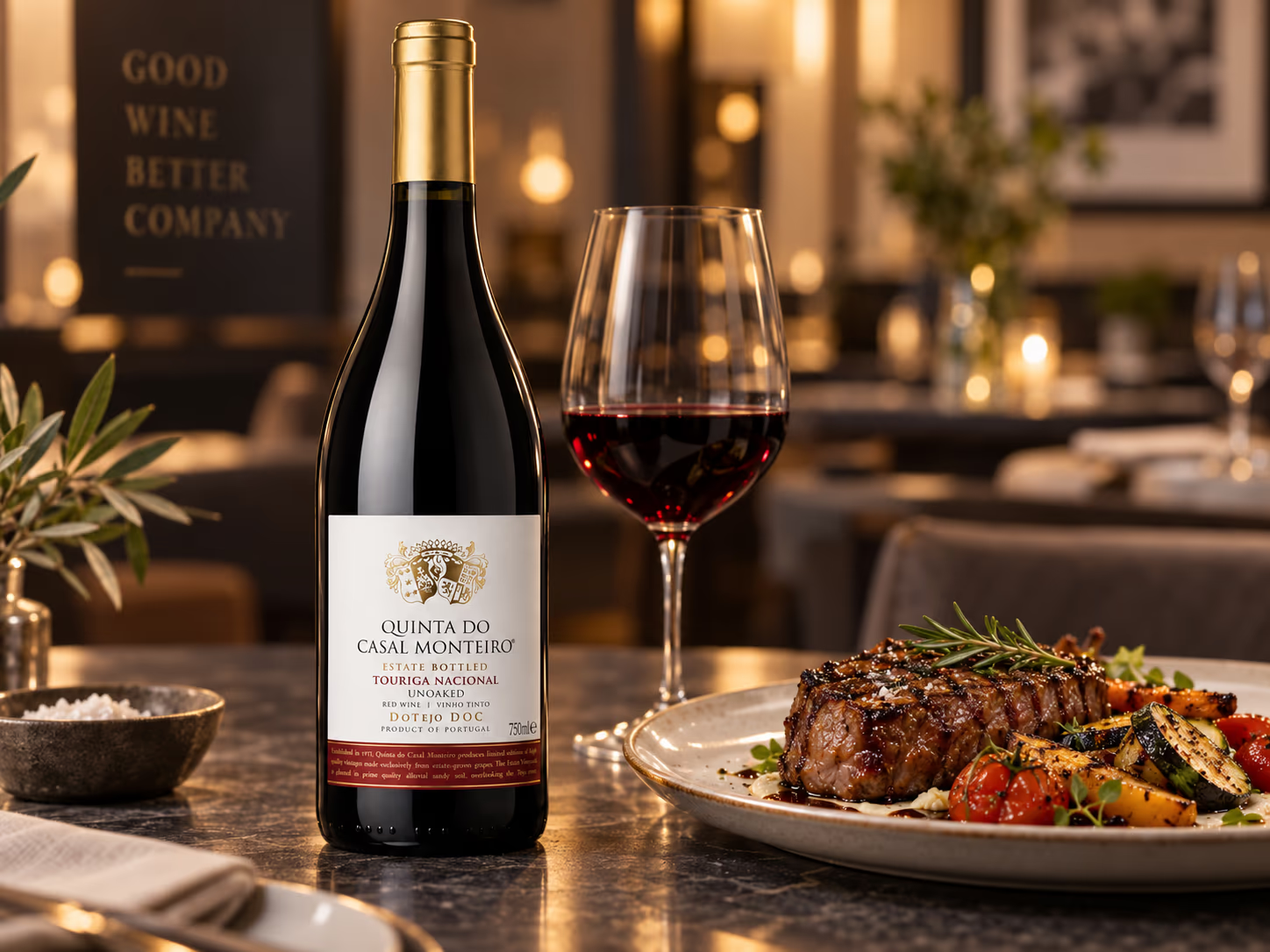
Touriga Nacional Without Oak: A Clearer View of Portugal’s Distinctive Red Grape
For many wine professionals, Portugal’s native grape varieties are one of the strongest routes into understanding the country’s diversity. Touriga Nacional is particularly important because it combines an immediately recognisable Portuguese identity with structural qualities that are relatively easy to communicate at the table.
But there is more than one way to present the variety.
Touriga Nacional is often discussed in the context of concentrated reds, blends and wines matured in oak. An unoaked interpretation offers a different perspective. By removing barrel influence from the equation, the focus shifts more directly towards the grape itself: its colour, tannins, fruit, floral character and the way those elements respond to place and winemaking.
For sommeliers, retailers and buyers seeking to explain Portuguese wine clearly, that makes Touriga Nacional an especially useful grape to explore.
What defines Touriga Nacional?
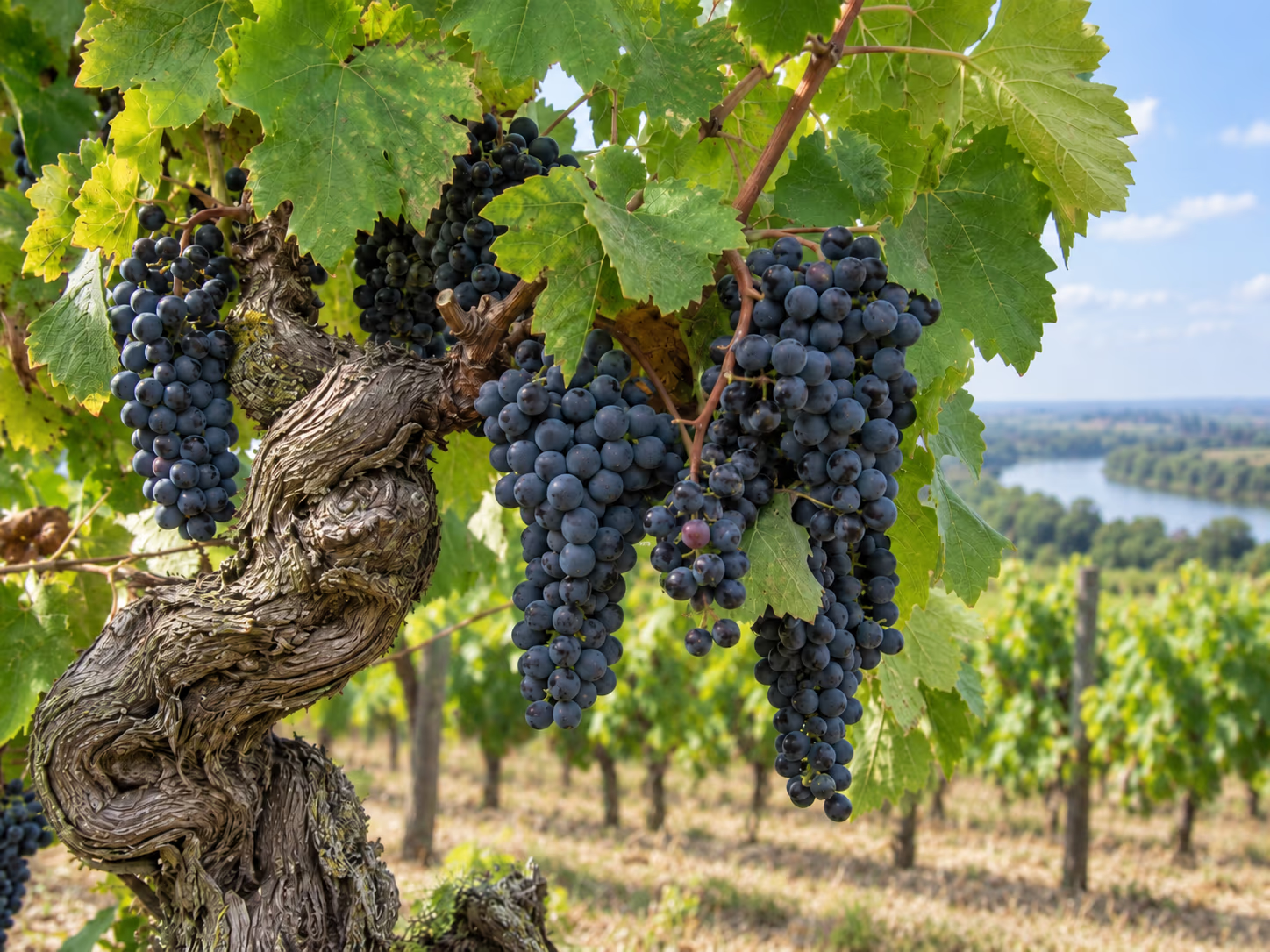
Touriga Nacional is a thick-skinned Portuguese red grape. Wines of Portugal associates those skins with substantial colour and tannin, giving the variety natural structure and ageing potential. Its aromatic profile combines fruit and floral elements, with references including ripe blackcurrant, raspberry, herbs and liquorice.
That combination is important. Touriga Nacional is not defined only by weight or tannin. Its appeal also lies in the contrast between structural intensity and aromatic detail.
The grape originated in northern Portugal but is now planted much more widely, including in the Tejo region. That geographical spread matters because it allows wine professionals to look beyond the idea that a native Portuguese variety belongs to only one regional expression.
For the mature markets, where wine lists and specialist retail ranges often need to communicate unfamiliar grape names efficiently, this gives Touriga Nacional a useful role. It can introduce Portuguese identity through a single variety while opening a broader conversation about regional expression.
Why an unoaked version changes the conversation
Oak can be an important winemaking tool, but it also introduces its own aromas, flavours and textural effects. When a wine is deliberately made without oak, the discussion becomes more focused on the grape and the decisions made during fermentation and extraction.
This is especially revealing with Touriga Nacional because the variety already brings substantial structure of its own.
An unoaked wine does not necessarily mean a light wine. In the case of Touriga Nacional, its thick skins provide the raw material for colour and tannin. The winemaker can therefore work with maceration, fermentation temperature and time on the skins to build structure without relying on barrel ageing.
That distinction is useful for sommeliers explaining wine style to guests. “Unoaked” is not simply shorthand for freshness or simplicity. It describes one part of the winemaking process. The final structure still depends on the grape variety and how it is handled in the winery.
In that sense, an unoaked Touriga Nacional provides a particularly direct way to understand what the variety itself contributes.
Touriga Nacional in Tejo
Tejo provides another useful dimension to the discussion.
Quinta do Casal Monteiro is an estate producer in Portugal’s Tejo region, where Touriga Nacional is grown alongside other Portuguese and international varieties. The estate describes its vineyards as being influenced by the proximity of the Tagus River, with sandy and alluvial soils forming part of the local viticultural context.
For wine buyers, the significance is not that Touriga Nacional needs to be compared with examples from better-known Portuguese regions. Rather, Tejo demonstrates that native grapes can be interpreted through different regional settings while retaining a recognisable varietal identity.
This provides useful material for a wine list or retail conversation. Instead of presenting Portugal as a collection of difficult regional names, the starting point can be simpler: one native grape, one region and one clearly defined winemaking approach.
From there, the customer can begin to understand how grape, place and technique interact.
Featured wine: Forma de Arte Touriga Nacional Unoaked
The featured wine is Forma de Arte Touriga Nacional Unoaked, a DoTejo DOC red from the 2023 vintage.
It is made exclusively from Touriga Nacional. The grapes are picked at the desired maturation point before fermentation in stainless-steel tanks with programmable pumping-over at a controlled temperature of 25°C.
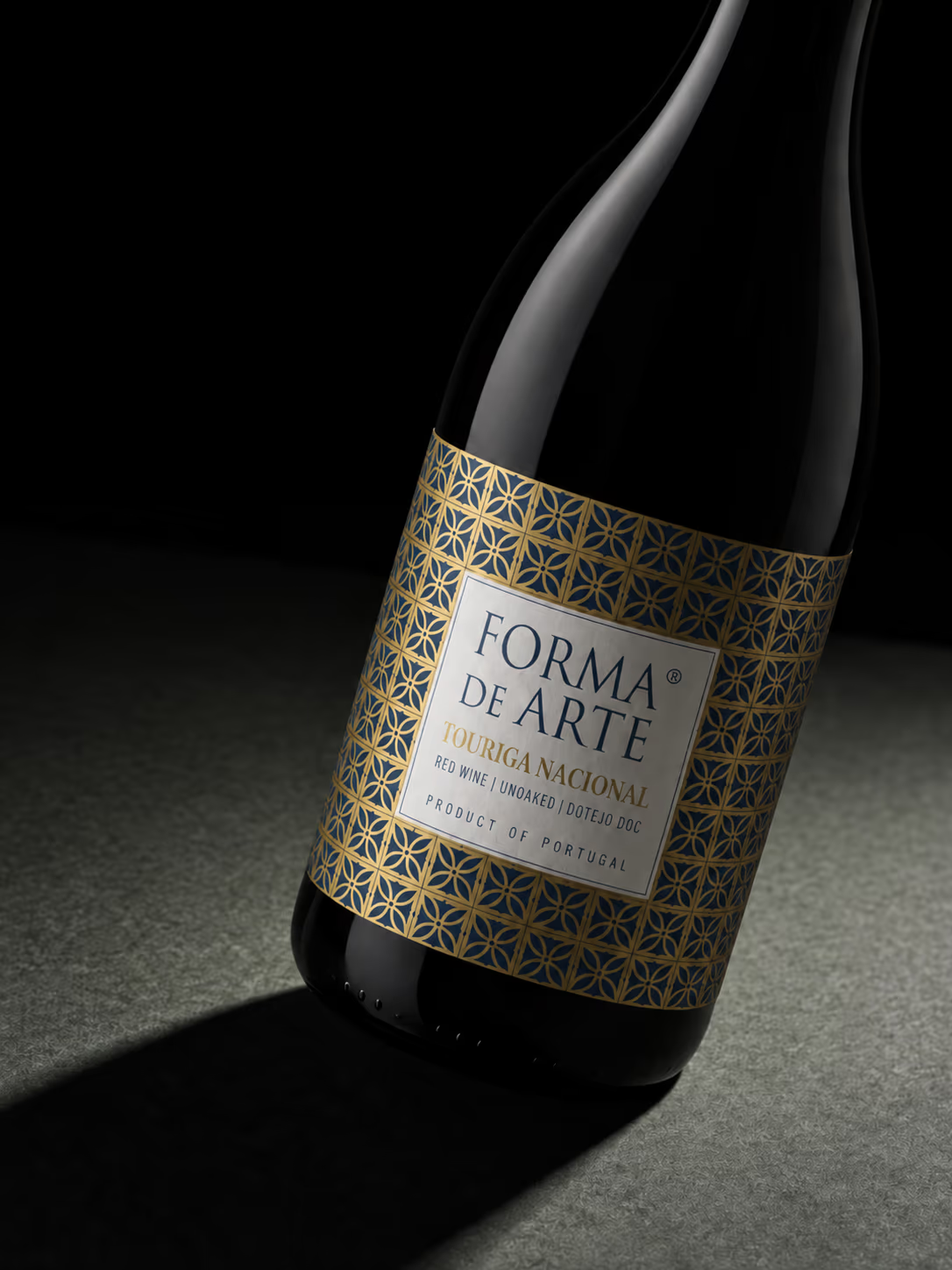
A long maceration continues until the completion of malolactic fermentation. Rather than moving into barrel, the wine remains in stainless steel for one year.
That process is central to understanding the style. The wine retains the full-bodied structure associated with the variety, while avoiding the additional flavour contribution of oak. The technical sheet describes the resulting wine as concentrated and aromatic, with good structure and complexity and a long, persistent finish.
For professionals, the point is not simply that the wine is unoaked. It is that the winemaking makes the grape itself easier to discuss. Touriga Nacional provides the structural framework; stainless steel keeps the emphasis on varietal and regional expression.
Gastronomy: structure without an oak-led profile
Touriga Nacional’s combination of tannin, concentration and aromatic intensity naturally places it alongside foods with enough flavour and texture to meet the wine.
Wines of Portugal associates the grape with red meat, grilled foods, charcuterie, hard cheeses and more elaborate pasta dishes. The featured wine’s technical sheet also recommends spicy dishes.
For a restaurant context, roast lamb is a logical application. The protein and richness of the meat provide sufficient weight for the wine’s tannic structure, while herbs used in the dish can connect with the grape’s more savoury and aromatic dimensions.
Game can provide another useful direction, particularly when the preparation avoids excessively sweet sauces. Classic restaurant dishes based around roasted or grilled meats can also allow the fruit and floral character of the grape to remain visible alongside its structure.
The absence of oak can be relevant here. When a dish already contains roasted, grilled or savoury elements, the wine does not necessarily need an additional layer of barrel-derived flavour. An unoaked style can instead provide contrast through fruit, aromatics and tannin.
Why this matters for wine lists and buyers
Portuguese wine can present a communication challenge: its diversity is an advantage, but unfamiliar grape names can require explanation.
Single-varietal wines offer one way to make that diversity easier to navigate. Touriga Nacional can be introduced as a Portuguese red grape first, before moving into region, production method and stylistic differences.
For sommeliers, this creates a clear sequence of information:
Portugal → Touriga Nacional → Tejo → unoaked winemaking
For specialist retailers, the same structure can support staff education and consumer discovery. Rather than asking the customer to understand an entire Portuguese classification system at once, the conversation begins with a grape and a style.
For importers and distributors, this also provides a commercially useful point of differentiation. An unoaked expression occupies a different educational space from barrel-aged Portuguese reds while maintaining the identity and structure associated with a native grape variety.
That is particularly relevant when building a range intended to show stylistic breadth rather than multiple wines that tell essentially the same story.
A different way to understand Portuguese red wine
Touriga Nacional is capable of delivering colour, tannin, aromatic intensity and structural depth without depending on oak for its identity.
That is what makes an unoaked interpretation educationally valuable. It separates two elements that are sometimes treated as inseparable in red wine: the natural structure of the grape and the influence of barrel ageing.
For wine professionals, this creates a straightforward way to discuss Portuguese wine through variety, region and technique rather than relying on generalisations about power or maturity.
And for the customer, it offers something equally useful: a clearer view of what Touriga Nacional actually tastes and feels like when the grape itself is allowed to lead the conversation.
#TourigaNacional
#PortugueseWine
#TejoWine
#NativeGrapes
#WineEducation
#Sommeliers
#UKWineTrade